
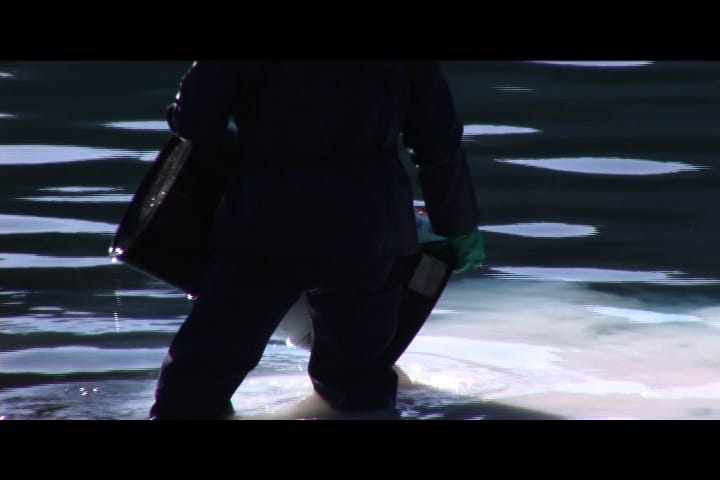
Over the past year, visitors to the EcoBlu blog have been reading about the “Native Fish Restoration” projects ongoing in Montana and elsewhere. These controversial projects involve clear-cutting the aquatic ecosystem with poison and then restocking with a fish monoculture. Increasingly, government agencies and conservation groups are promoting the 60-year-old practice as necessary to avoid species extinction at the hands of so-called “invasive” or “non-native” fish.
It is widely known that habitat destruction is the single greatest factor contributing to the current global species extinction problem (Pimm & Raven, 2000, pp. 843-845), NOT threats by invasive species. Habitat loss is due to growth of human populations including increased impacts resulting from agriculture and development.
Habitat destruction is “the process in which natural habitat is rendered functionally unable to support the species present. In this process, the organisms which previously used the site are displaced or destroyed, reducing biodiversity.” If this sounds like a description for many ”native fish restoration” management plans, it is.
The crude and outdated technique of poisoning waterways and stocking fish from hatcheries further damages these critical at-risk native habitats. And while the technical simplicity of these “native fish restoration plans” may appear initially attractive, the poisoning/stocking efforts do not reduce habitat loss, do not reduce habitat damage, and do not diminish habitat fragmentation.
Clearly, our priority should be to do what was recommended by scientists writing in the Journal of Wildlife Management in 1997: “Conservation efforts should be aimed foremost at stopping habitat loss and at habitat restoration.” This solid and implementable native species conservation recommendation promotes biodiversity (and ecosystem integrity, resiliency and stability) ultimately helping to prevent extinctions.
Tweet


troutheadwaters.com now powered by renewable wind energy!
“Habitat destruction is “the process in which natural habitat is rendered functionally unable to support the species present. In this process, the organisms which previously used the site are displaced or destroyed, reducing biodiversity.” If this sounds like a description for many ”native fish restoration” management plans, it is”.
I see this happening on my native trout river, the Bow River just along the banks where I fish. Another subdivision is built and it makes me very unsettled to say the least. I know what is about to happen here. I have seen deer in this area, all different species of birds, rabbits, coyotes, bugs of all kinds crawling and flying around. Now all we will get to see is houses and people trashing what used to be beautiful and teaming with life and the loss of the “biodiversity” you see in this article.
Two years ago I ran in to two contractors who were doing the sewage project for the subdivision, I asked what they were doing by the river with the survey equipment. They said they were going to put a sewage line, another words a big pipe across the Bow River right in a Brown Trout spawning habitat area. I was furious but there was nothing I could really do about this. Every year it gets worse and worse here and I know in five,ten, fifteen years the fish will be affected by the concrete jungle.
I hope in ten years when I introduce my daughter to the wonderful sport of fishing, that there are a few fish left for us to catch!!!
Thanks for the great work you do and never give up the hard work, I personally love what you are doing for our planet.
~Mike.
Habitat loss is becoming a major issue in Western New Brunswick, Canada.
Being a sportsman enjoying fishing, hunting, hiking; I have experienced what can only be described as the wholesale destruction of the environment.
Wetlands drained for new logging roads, road building techniques that deliver only silt to rivers and creeks, complete raping of the countryside to down hardwood ridges for hog fuel(this is not as renewable a resource as once predicted).
This not only turns the crystal clear waters to chocolate milk it warms the temperature of the habitat allowing warmer water invasive species such as small mouth bass to invade. It also deals a death blow to riparian zones which have been trampled by equipment.
There is no logic when it comes to greed.
So is your argument that in order to restore a species we return to native habitat via heavy-handed intervention? Or allow nature to recover and restore itself over time? The Little Hunting Creek where I grew up in Virginia was once hopelessly polluted and sustained only fish like carp, perch, catfish, and the occasional alligator gar. In the last 35 years or so, it has recovered to the point of now sustaining healthy populations of large mouth bass and stripers! It’s so cool to see. And this example is of a waterway in a heavily developed suburban/urban environment.
Your thoughts and opinions help me see the light. Thanks.